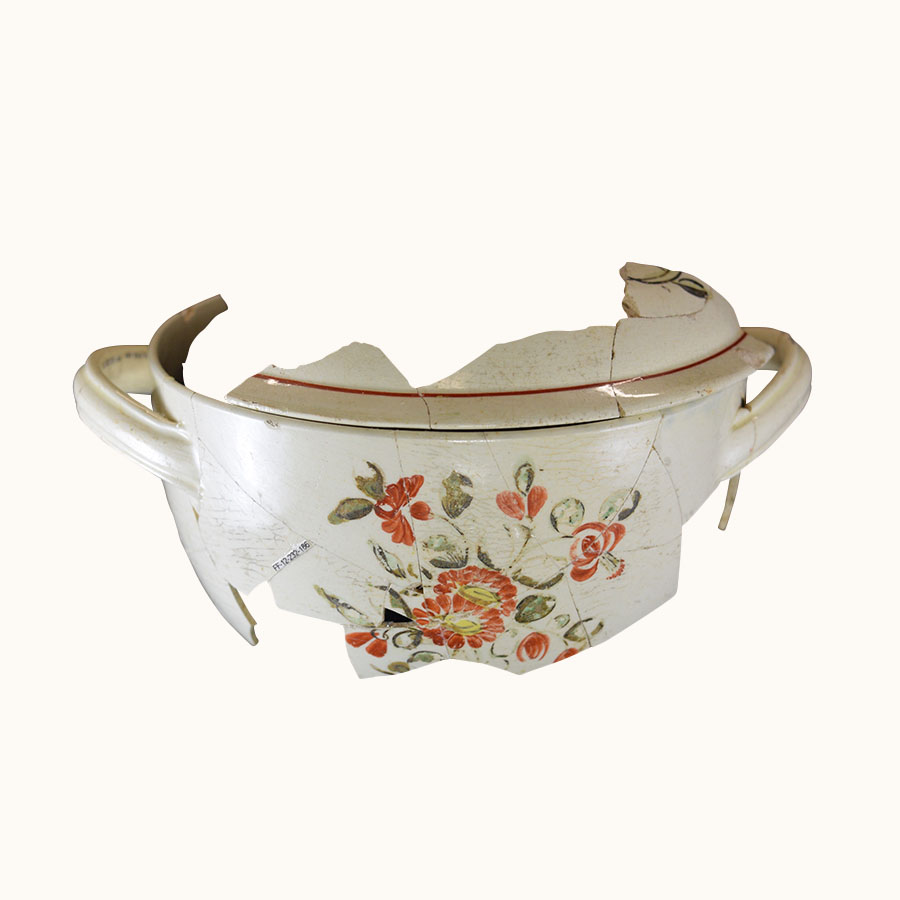
Ferry Farm was George Washington’s modest childhood home, where Mary Washington, George Washington’s mother, welcomed guests and cared for her family. Ferry Farm’s location on the Rappahannock River permitted Mary to have a steady stream of guests to entertain, requiring fine wares such as this ceramic lidded bowl adorned with flowers.
Among the estimated thirty enslaved people working at Ferry Farm were skilled artisans who mended broken ceramics, such as this lidded bowl, using their knowledge of glue-making recipes.
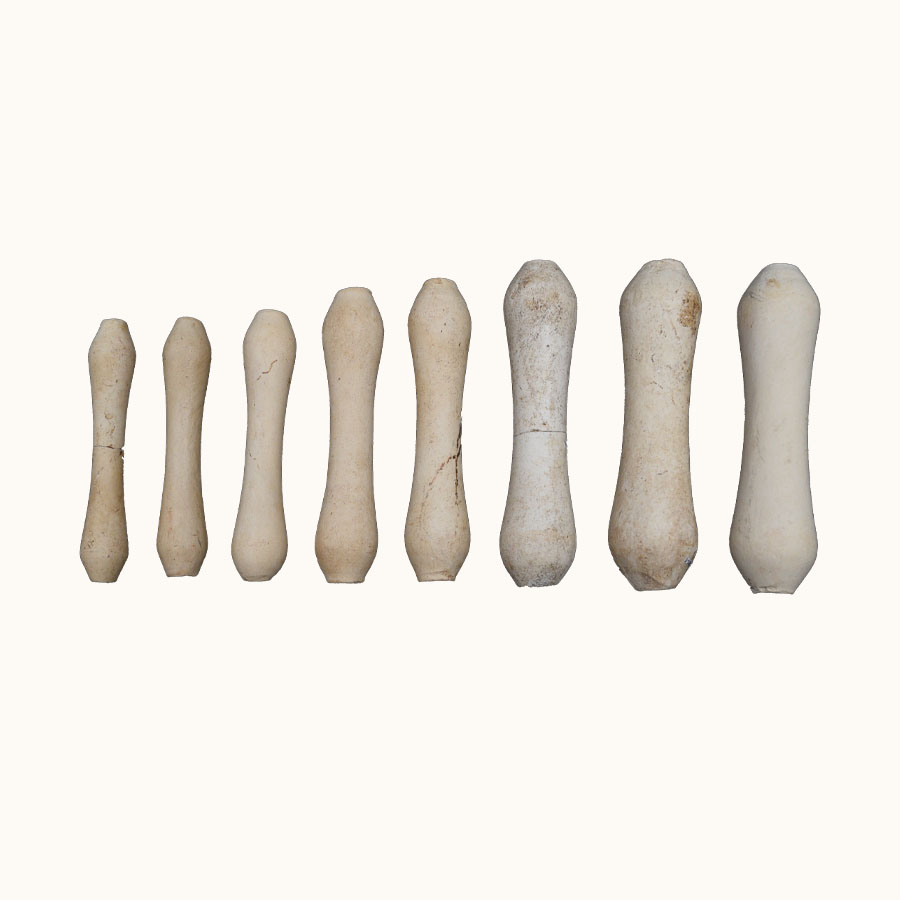
Archaeologists have uncovered numerous wig curlers like these in the area of the slave quarters, suggesting that the Washingtons relied on their enslaved labor for keeping up fashionable appearances.
Washington spoke out privately against slavery, but he never publicly spoke against the practice. Despite his intent to free those he enslaved at Mount Vernon upon his death, only half of those people would receive their freedom after he and Martha Washington died.
Bowl
Unidentified Craftsperson
China
18th Century
Chinese soft paste porcelain 472
Loan courtesy of the George Washington Foundation
Wig Curlers
Unidentified Craftspeople
Stafford County, Virginia
1738–1772
Clay
FF-12-00423-11, FF-12-00181-1, FF-18-00333-1, FF-12-00449-1, FF-06-00001-1, FF-18-00170-1, FF-20-00067-1 mended with FF-06-00013-1, FF-18-00067-2 mended with FF-14-00228-8
Loan courtesy of the George Washington Foundation
Objects
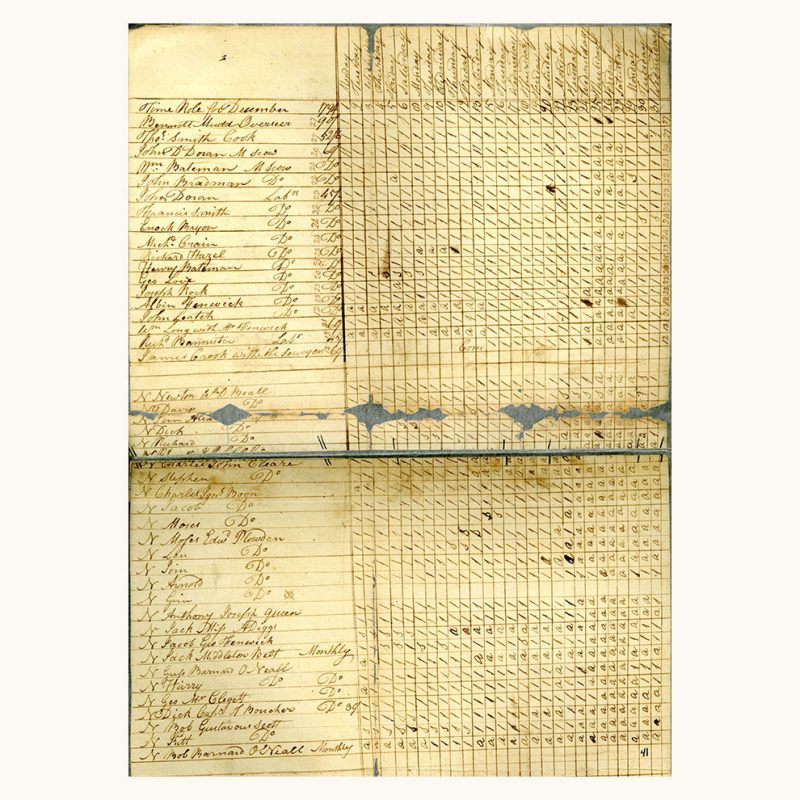
John Hoban – Enslaved Payroll for the White House (Facsimile)